A spectacular skull
Its skull included a short bony frill, a nasal horn, and two long brow horns. Large skulls exceeded two metres in length.
The friend who handles it.
You are the emergency contact of the group chat. Patient, dependable, and perfectly prepared to turn a minor inconvenience into a firm boundary.
SIGNATURE MOVESaying ‘I've got it’ and actually having it.
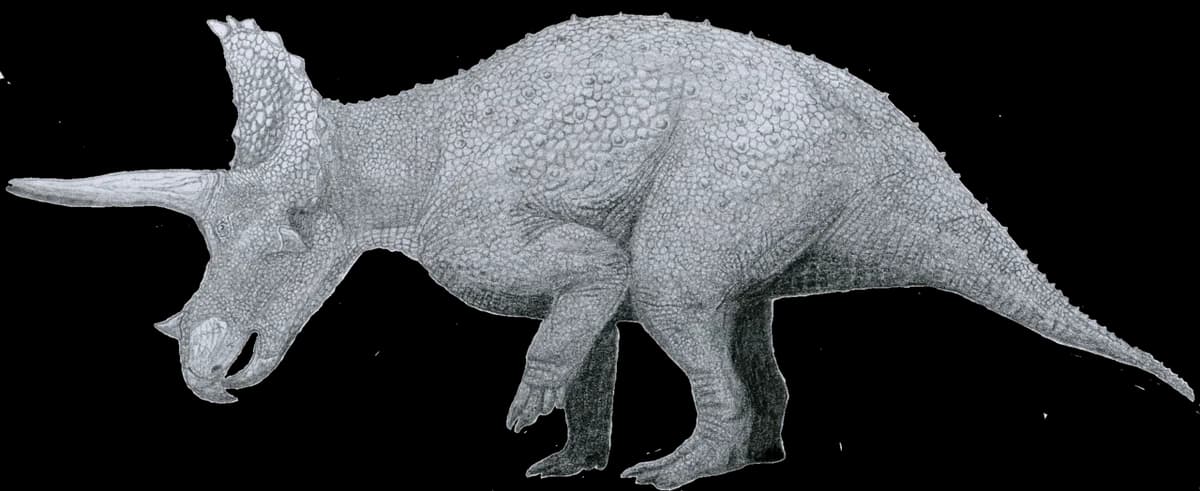 TRICERATOPS HORRIDUS · HERBIVORE
The jokes are ours.
The animal was very real.
Its skull included a short bony frill, a nasal horn, and two long brow horns. Large skulls exceeded two metres in length.
Closely packed columns of replacement teeth formed cutting surfaces for processing tough vegetation.
Unlike many other ceratopsians, Triceratops had a largely solid frill without the large paired openings seen in relatives.
Horn shape and orientation changed as the animal matured, complicating the identification of young specimens.
Triceratops and Tyrannosaurus occur in the same late-Cretaceous formations. Some bones preserve tyrannosaur tooth marks.
T. horridus and T. prorsus are commonly recognized, with differences in skull shape and their positions in the fossil record.
Horns and frills probably served multiple purposes. Their exact roles in display, combat, and defense remain subjects of research.
Read more: Triceratops on Wikipedia · Research and references. Facts are summarized in our own words. Size and date ranges are approximate; estimates vary by specimen and study. Gallery images may include other species within the genus.
Fossils, museum displays, and published reconstructions. Artwork shows an interpretation; it is not a photograph of a living dinosaur.
Eight questions and an optional face scan will settle this. Very unofficially.