Extraordinary claws
Its enormous manual claws are among the longest known in any animal, with the bony cores approaching a metre in length.
A hobby that got out of hand.
You started with a casual interest. Now there is specialized equipment, a dedicated room, and a vocabulary that concerns your friends. Your commitment is magnificent.
SIGNATURE MOVESaying ‘It's just a little project’ beside a very large project.
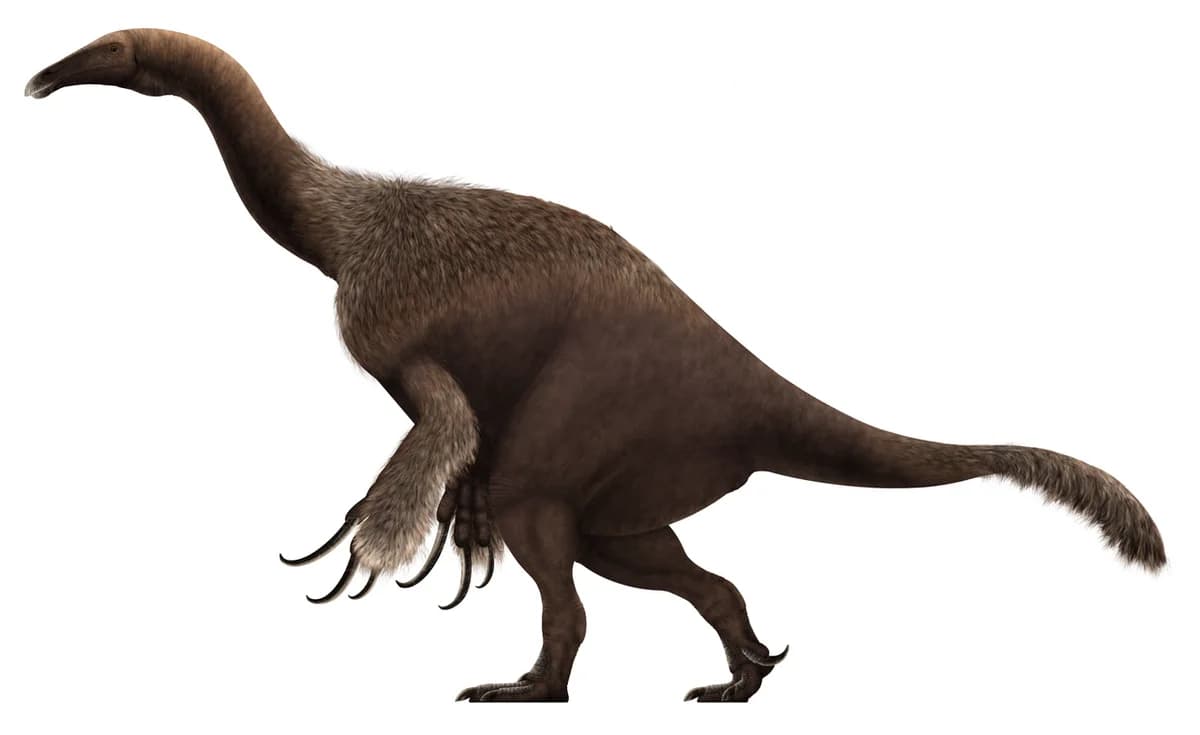 THERIZINOSAURUS CHELONIFORMIS · HERBIVORE
The jokes are ours.
The animal was very real.
Its enormous manual claws are among the longest known in any animal, with the bony cores approaching a metre in length.
The original claw material was initially interpreted as belonging to a giant turtle-like reptile.
Therizinosaurs evolved a largely herbivorous lifestyle within a group famous for meat-eating members.
Large forelimbs carried the spectacular claws, unlike the reduced arms of many giant predatory theropods.
A long neck, broad torso, and small head are reconstructed largely using more complete relatives.
Its fossils come from Mongolia's Nemegt Formation, which preserves river and floodplain environments.
Therizinosaurus itself is fragmentary. Claw function, exact diet, and many details of its appearance rely partly on comparisons with relatives.
Read more: Therizinosaurus on Wikipedia · Research and references. Facts are summarized in our own words. Size and date ranges are approximate; estimates vary by specimen and study. Gallery images may include other species within the genus.
Fossils, museum displays, and published reconstructions. Artwork shows an interpretation; it is not a photograph of a living dinosaur.
Eight questions and an optional face scan will settle this. Very unofficially.