Plates in the skin
The back plates were osteoderms: bones formed in the skin rather than extensions of the spine.
Strong boundaries. Decorative exterior..
You have your own taste, your own pace, and absolutely no interest in the committee's opinion. Your calm exterior comes with an extensive security system.
SIGNATURE MOVEBeing unbothered, with spikes.
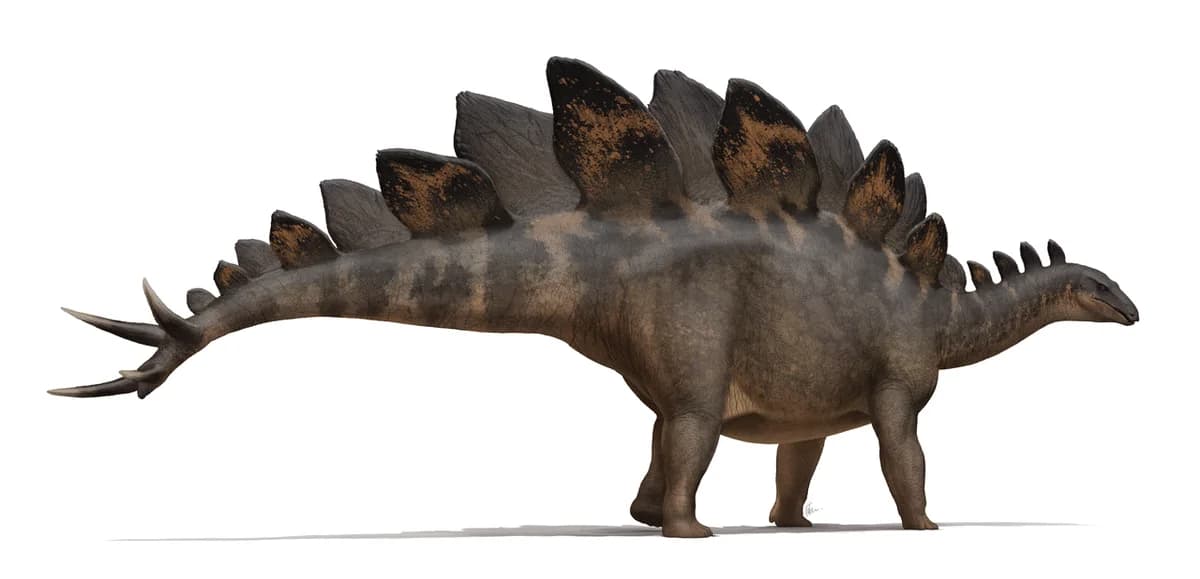 STEGOSAURUS STENOPS · HERBIVORE
The jokes are ours.
The animal was very real.
The back plates were osteoderms: bones formed in the skin rather than extensions of the spine.
Four long tail spikes formed a weapon often called a thagomizer, a name borrowed from a cartoon.
Its small head, beak, and low browsing height fit a diet of vegetation close to the ground.
Longer hind limbs than forelimbs gave the back its strongly sloping outline.
An enlarged space in the hip vertebrae inspired an old ‘second brain’ story. It was not another brain.
Stegosaurus fossils occur in the Morrison Formation, alongside sauropods such as Diplodocus and theropods such as Allosaurus.
The plates may have helped with display or species recognition; how much they contributed to heat exchange remains debated.
Read more: Stegosaurus on Wikipedia · Research and references. Facts are summarized in our own words. Size and date ranges are approximate; estimates vary by specimen and study. Gallery images may include other species within the genus.
Fossils, museum displays, and published reconstructions. Artwork shows an interpretation; it is not a photograph of a living dinosaur.
Eight questions and an optional face scan will settle this. Very unofficially.