An unfair name
Oviraptor was named after a skeleton found near eggs initially thought to belong to Protoceratops.
Would like to correct the record.
You have been misunderstood, and you have prepared a brief statement. It is not brief. You care about the details, especially when the details vindicate you.
SIGNATURE MOVEProviding context nobody asked for but everybody needed.
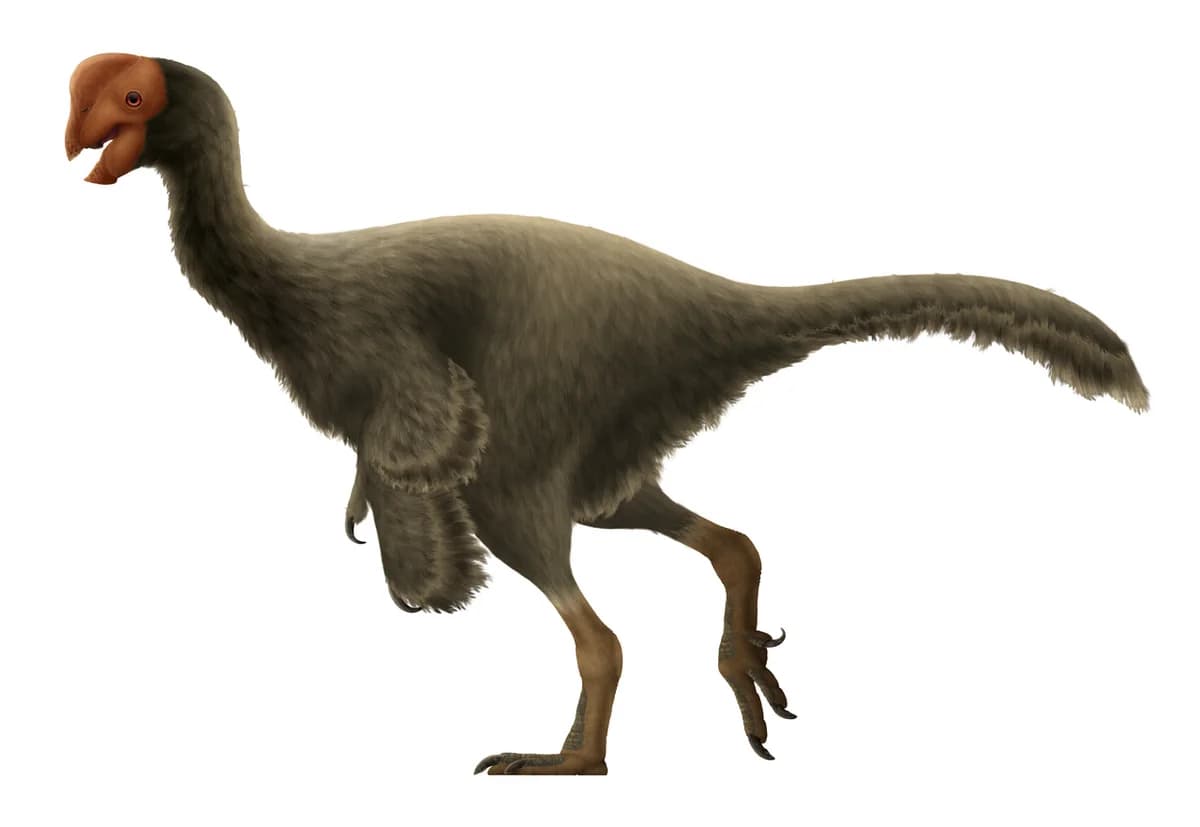 OVIRAPTOR PHILOCERATOPS · OMNIVORE / UNCERTAIN
The jokes are ours.
The animal was very real.
Oviraptor was named after a skeleton found near eggs initially thought to belong to Protoceratops.
Later oviraptorosaur embryos showed that similar eggs belonged to animals in its own group.
Its short, deep skull carried a beak rather than a mouthful of teeth.
Related oviraptorosaurs preserve bird-like brooding poses over nests, changing interpretations of the whole group.
Many familiar ‘Oviraptor’ illustrations actually draw on better-known relatives such as Citipati.
Feathered oviraptorosaur fossils support reconstructing these animals with substantial plumage.
The original Oviraptor skull is damaged and incomplete. Its exact crest shape and dietary specialization are uncertain.
Read more: Oviraptor on Wikipedia · Research and references. Facts are summarized in our own words. Size and date ranges are approximate; estimates vary by specimen and study. Gallery images may include other species within the genus.
Fossils, museum displays, and published reconstructions. Artwork shows an interpretation; it is not a photograph of a living dinosaur.
Eight questions and an optional face scan will settle this. Very unofficially.