The terrible claw
The enlarged second-toe claw gave Deinonychus its name and was held off the ground during normal walking.
Read the entire strategy guide.
You do your research, spot the pattern, and quietly become the person everyone needs. Your idea of spontaneity is a well-prepared contingency.
SIGNATURE MOVEHaving a spreadsheet for something that did not require one.
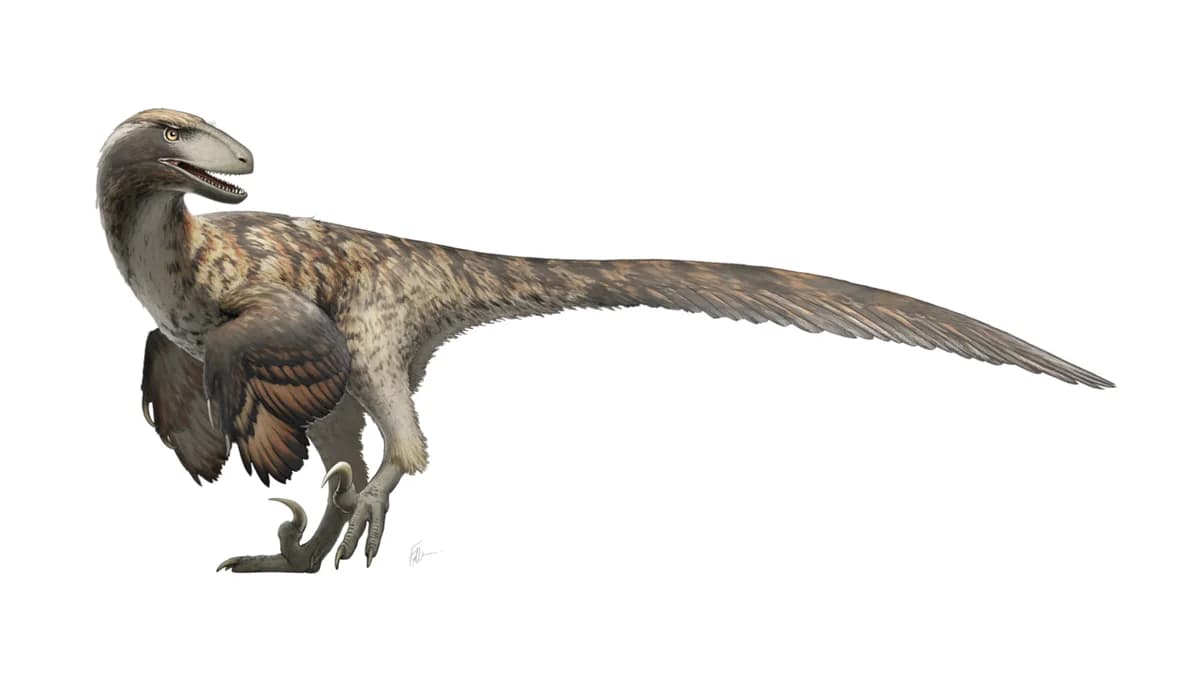 DEINONYCHUS ANTIRRHOPUS · CARNIVORE
The jokes are ours.
The animal was very real.
The enlarged second-toe claw gave Deinonychus its name and was held off the ground during normal walking.
John Ostrom's research on Deinonychus helped overturn the stereotype of dinosaurs as uniformly sluggish animals.
Its anatomy played a major role in renewed arguments that birds evolved from theropod dinosaurs.
Long bony extensions supported the tail and helped maintain balance.
Deinonychus teeth and bones have been found with the larger herbivore Tenontosaurus, indicating feeding interactions.
Feathers are inferred from its position among feather-bearing relatives, even though direct plumage impressions are not known for this genus.
Group feeding evidence does not settle whether Deinonychus hunted in coordinated packs like wolves.
Read more: Deinonychus on Wikipedia · Research and references. Facts are summarized in our own words. Size and date ranges are approximate; estimates vary by specimen and study. Gallery images may include other species within the genus.
Fossils, museum displays, and published reconstructions. Artwork shows an interpretation; it is not a photograph of a living dinosaur.
Eight questions and an optional face scan will settle this. Very unofficially.