Two celebrated specimens
Much of the genus's history rests on relatively complete specimens from Germany and France.
Small package, extensive opinions.
Your energy occupies more space than you do. You notice everything, have a comment ready, and cannot believe everyone else is moving this slowly.
SIGNATURE MOVEDelivering a surprisingly detailed review of a minor event.
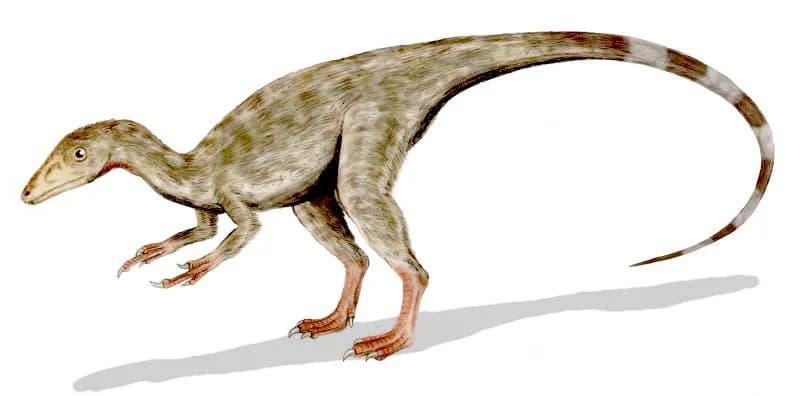 COMPSOGNATHUS LONGIPES · CARNIVORE
The jokes are ours.
The animal was very real.
Much of the genus's history rests on relatively complete specimens from Germany and France.
Small lizard remains preserved with specimens provide unusually direct evidence of diet.
Once famous as the smallest dinosaur, Compsognathus has been surpassed by other discoveries—and living birds.
The long tail balanced a lightly built body carried on two hind limbs.
Its fossils come from deposits capable of preserving delicate skeletal details.
Its similarities to Archaeopteryx made it important in nineteenth-century discussions of birds and dinosaurs.
Its exact placement among small theropods and details of body covering remain debated; direct feather impressions are not known for these specimens.
Read more: Compsognathus on Wikipedia · Research and references. Facts are summarized in our own words. Size and date ranges are approximate; estimates vary by specimen and study. Gallery images may include other species within the genus.
Fossils, museum displays, and published reconstructions. Artwork shows an interpretation; it is not a photograph of a living dinosaur.
Eight questions and an optional face scan will settle this. Very unofficially.