Horns above the eyes
Two prominent bony horns project from the skull, inspiring the bull reference in its name.
Arrives with an attitude.
You make an impression before you say anything. Efficient, direct, and slightly allergic to unnecessary explanation. People call it intensity. You call it being on time.
SIGNATURE MOVEMaking a very short email feel very definitive.
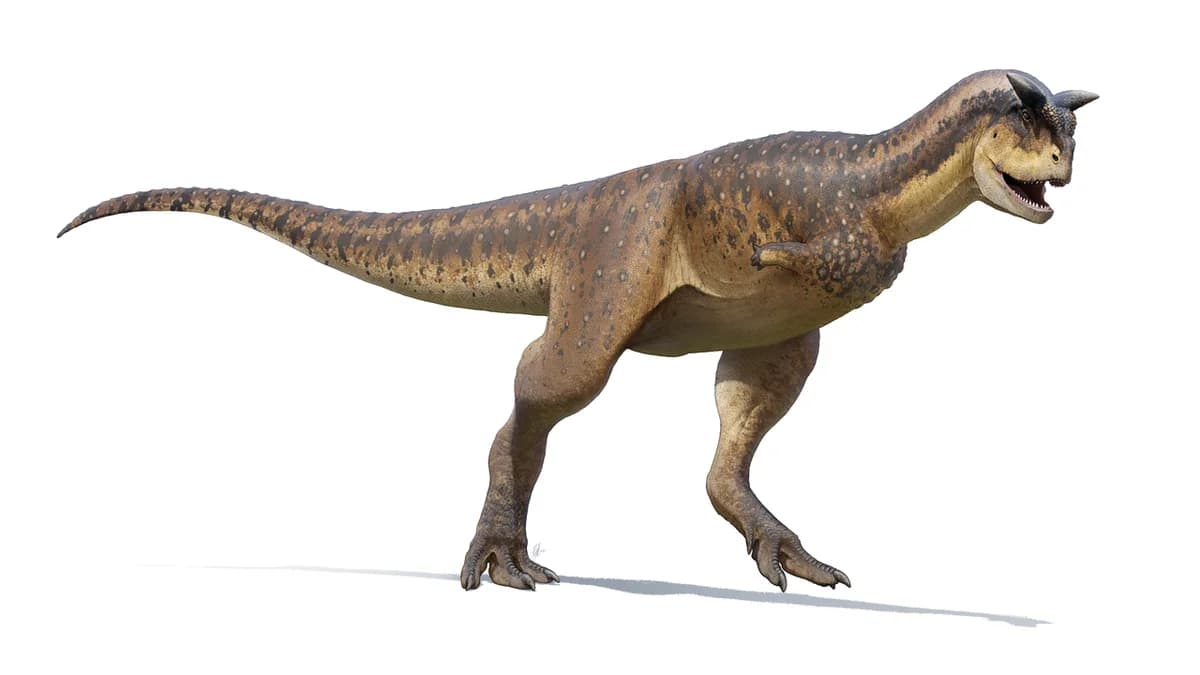 CARNOTAURUS SASTREI · CARNIVORE
The jokes are ours.
The animal was very real.
Two prominent bony horns project from the skull, inspiring the bull reference in its name.
Its forelimbs were even more reduced than those of Tyrannosaurus, with unusual, tiny hands.
The type specimen preserves extensive skin impressions, showing scales and larger conical feature scales.
The skull was relatively short and tall compared with many other large theropods.
Carnotaurus belonged to a group of predators especially well represented in southern continents.
Much of what is known comes from a single unusually complete skeleton discovered in Patagonia in 1984.
The horns' function and exact running performance are uncertain; biomechanical models do not directly measure a living animal's speed.
Read more: Carnotaurus on Wikipedia · Research and references. Facts are summarized in our own words. Size and date ranges are approximate; estimates vary by specimen and study. Gallery images may include other species within the genus.
Fossils, museum displays, and published reconstructions. Artwork shows an interpretation; it is not a photograph of a living dinosaur.
Eight questions and an optional face scan will settle this. Very unofficially.